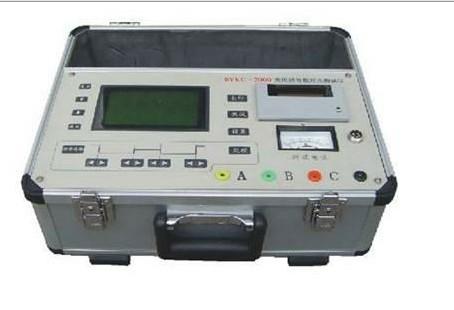
Precision instrument for measuring low resistance in electrical equipment, widely used in power systems, industrial manufacturing, and scientific research fields. This tester is particularly suitable for detecting winding resistance in equipment such as transformers, motors, and cables, to ensure the safety and reliability of these devices.
Main Features
High-precision measurement: The 3A DC resistance tester can provide very accurate resistance measurement results, typically with a resolution reaching the micro-ohm (μΩ) level, which is crucial for detecting subtle changes.
High current output: This type of tester can output a constant DC current of up to 3 amperes, which helps overcome the effects of contact resistance and lead resistance, thereby obtaining more accurate measurement results.
Fast measurement: Using advanced measurement technology, it can complete resistance measurements in a short time, improving work efficiency.
Portability: Modern 3A DC resistance testers are compact and lightweight, making them easy to carry to the field for testing work.
Application Scenarios
Transformer maintenance: Regularly measuring the DC resistance of transformer windings is one of the important steps in assessing their condition, helping to detect issues such as broken strands or poor contact in the windings.
Motor inspection: By measuring the resistance of motor windings to determine if there are short circuits or open circuits, ensuring the normal operation of the motor.
Cable quality testing: For newly installed or repaired cables, using a DC resistance tester can verify whether their conductive performance meets requirements.
Importance
Accurately measuring the DC resistance in electrical equipment is of great significance for ensuring the safe and stable operation of the equipment. For example, in transformers, changes in winding resistance may indicate internal faults; in motors, it may be due to overheating or other mechanical damage. Timely detection of these issues and taking appropriate measures can avoid greater losses.
With the development of technology, the 3A DC resistance tester is also continuously improving, not only in measurement accuracy but also in operational convenience, data analysis capabilities, and other aspects. Whether for professional electrical engineers or researchers in related fields, mastering and reasonably using such tools is very valuable.
If you have any questions about the specific operation methods, application scenarios, or how to choose a model that suits your needs for the 3A DC resistance tester, please feel free to ask. I will do my best to help you.