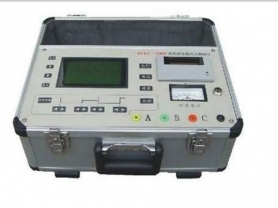
In electrical engineering, a DC resistance tester is an important tool used to measure the resistance of conductors in electrical equipment. By accurately measuring resistance values, it is possible to assess the health of electrical equipment, detect potential faults, and ensure the safe operation of the equipment. Whether it is transformers, motors in power systems, or various electrical components in industrial production lines, the DC resistance tester is an indispensable testing method.
What is a DC Resistance Tester?
A DC resistance tester is an instrument specifically designed to measure the DC resistance of conductors in electrical equipment. It provides high-precision resistance measurement results, helping technicians evaluate the electrical connection status, winding resistance consistency, and other electrical parameters of the equipment. This testing is of great significance for preventing electrical faults and improving equipment reliability.
Working Principle
The working principle of a DC resistance tester is based on Ohm's law. The tester applies a stable DC current to the object under test and measures the resulting voltage drop, thereby calculating the resistance value. The specific steps are as follows:
Applying Current: The tester applies a known DC current to the object under test (such as a transformer winding).
Measuring Voltage: Using a high-precision voltage measurement device, the voltage drop across the object is measured when the current is applied.
Calculating Resistance: According to Ohm's law
, the resistance value of the object under test is calculated.
Main Functions and Features
High-Precision Measurement: Provides very accurate resistance measurement results, ensuring the reliability of test data.
Multiple Test Modes: Supports various test modes, such as single-phase, two-phase, or multi-phase measurement, suitable for different types and scales of electrical equipment.
Automatic Testing: Many modern DC resistance testers have automatic testing functions that can automatically identify test points and perform measurements.
Data Storage and Analysis: Built-in data storage function supports data recording and later analysis, facilitating the generation of detailed test reports.
User-Friendly Interface: Adopts a graphical interface and intuitive operation process, making it convenient for technicians to use.
Application Scenarios
DC resistance testers are widely used in various fields in power systems and industrial production, including but not limited to:
Power Equipment Testing: Used for winding resistance measurement of transformers, generators, motors, and other equipment to evaluate their electrical connection status.
Cable Testing: Detects the conductor resistance of cables to ensure their electrical performance after long-term use.
Relay and Switch Testing: Measures the contact resistance of relay and switch contacts to ensure reliable operation.
Industrial Production Lines: In automated production lines, used to detect the resistance values of various electrical components to ensure the normal operation of equipment.
Usage Precautions
Although DC resistance testers have many advantages, the following points should be noted during use:
Correct Connection: Ensure the connection between the tester and the device under test is correct to avoid inaccurate test results due to wiring errors.
Safe Operation: During testing, safety regulations should be followed to prevent accidents such as electric shock.
Environmental Adaptation: Pay attention to factors such as temperature and humidity in the test environment to avoid affecting the accuracy of test results.
Regular Calibration: To ensure the measurement accuracy of the tester, it should be calibrated and maintained regularly.
Technology Development Trends
With the development of power electronics and sensor technology, DC resistance testers are also continuously innovating. Future DC resistance testers will be more intelligent, with higher measurement accuracy and a wider range of applications. For example, by integrating advanced signal processing technology and wireless communication functions, remote monitoring and data analysis can be achieved, further improving testing efficiency and accuracy.
Conclusion
As a key tool for electrical equipment testing and maintenance, the DC resistance tester helps engineers and technicians ensure the safety and reliability of electrical systems by accurately measuring resistance values. With continuous technological advancement, future DC resistance testers will be more intelligent and efficient, better serving the testing and maintenance of power systems and industrial production.
This article outlines the basic concept, working principle, and application of DC resistance testers in electrical engineering. If you need more detailed information or have other specific needs, please feel free to let us know.