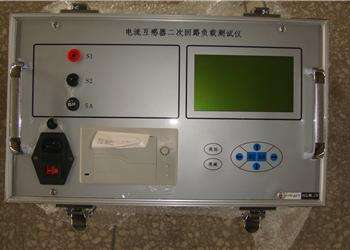
Reactive power compensation device maintenance: Detect capacitors in the capacitor bank with excessive capacitance deviation (such as capacity decay, internal element breakdown) to prevent the entire bank from exploding due to a single unit failure. Reactor fault diagnosis: Detect inter-turn short circuits in dry-type air-core reactors (manifested as decreased inductance, changes in DC resistance). CVT preventive test: Measure the dividing capacitor of capacitive voltage transformers to assess their insulation condition. New equipment acceptance: Verify that the parameters of newly installed capacitors or reactors meet the nameplate and design requirements. 4. Key Technical Features Non-disconnection measurement technology: This is the most valued function in the power field. Traditional methods require disconnecting the connection wires of the capacitor bank to measure individual units, which is labor-intensive and dangerous. Modern instruments use specific wiring methods and algorithms to directly measure individual parameters under star or delta connections. Strong anti-interference capability: The electromagnetic environment at substations is complex; instruments typically have powerful digital filtering functions to ensure stable readings under strong interference. Protection functions: Equipped with overvoltage, overcurrent, and short-circuit protection to ensure that the tested equipment and the instrument itself are not damaged during testing. High automation: One-key automatic testing, automatic report generation, and built-in storage function. 5. Standards Followed In China, the following standards are mainly followed: DL/T 849.6 "General Technical Conditions for Special Testing Instruments for Power Equipment - Part 6: High-Voltage Electrostatic Voltmeter" (Note: Specific standards for capacitance and inductance meters may refer to DL/T related preventive test procedures) GB 50150 "Standard for Hand-over Test of Electric Equipment in Electrical Equipment Installation Engineering" DL/T 596 "Preventive Test Procedures for Power Equipment" IEC 60871 (Shunt capacitors for a.c. systems) 6. Selection and Usage Precautions Measurement range: Confirm whether the instrument's capacitance measurement range (e.g., 0.1μF - 2000μF) and inductance measurement range cover your equipment. Accuracy level: Typically, capacitance measurement accuracy is required to be ±0.5% or higher, and inductance measurement accuracy around ±1%. Wiring mode: Check whether the instrument supports the common wiring methods at your site (such as Y-type, Δ-type, bridge-type, etc., in non-disconnection mode). Safety grounding: Before testing, ensure that the instrument and the tested equipment's enclosure are reliably grounded. After testing, discharge before disconnecting wires (especially for capacitors). Temperature effect: Capacitance values are significantly affected by temperature; high-end instruments typically have temperature conversion functions to convert measured values to standard values at 20°C for comparison. If you need a comparison of specific brands (such as Wuhan Huatian, Baoding Tianwei, OMICRON, Megger, etc.) or specific wiring diagrams (e.g., how to measure star-connected capacitors without disconnection), please let me know, and I can provide more detailed guidance.