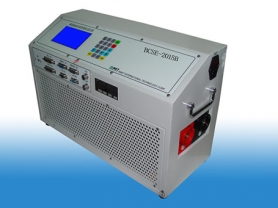
In the research, development, production, and maintenance of power systems, the high-current generator, as a key testing device, plays an irreplaceable role. It can simulate and output a wide range of currents to meet the testing requirements of power equipment under various operating conditions, ensuring the safe and reliable operation of power facilities. This article will elaborate on the basic principles, main functions, application fields, and the important role of the high-current generator in power commissioning and equipment testing.
I. Basic Principles and Technical Characteristics
The high-current generator is based on the principle of electromagnetic conversion. It converts low-voltage power into high voltage through a step-up transformer, and then through specially designed inverter circuits and rectification and filtering stages, produces stable DC or AC high-current outputs. Its key technical characteristics include:
High-precision control: Uses digital signal processors (DSP) or microcontrollers (MCU) to achieve precise control and adjustment of the output current.
Wide adjustable range: The output current range is wide, typically from tens of amperes to thousands of amperes, meeting different testing needs.
Safety protection: Built-in multiple protection mechanisms, such as overcurrent, overheat, and short-circuit protection, ensuring operational safety.
Portability and durability: Compact structure, easy to carry to the site, with good environmental adaptability and long-term stability.
II. Main Functions
Dynamic performance testing of power equipment: Used to test the thermal stability, voltage withstand capability, and operating characteristics of power transformers, circuit breakers, cables, generators, and other equipment under high currents.
Calibration of relay protection devices: Simulates real fault currents to verify the accuracy of action and response time of relay protection devices.
Ground resistance measurement: In conjunction with a ground resistance tester, injects high currents to accurately measure the resistance value of the grounding system.
Scientific research and teaching: Used for theoretical verification and experimental teaching in fields such as power electronics and motor drives.
III. Wide Range of Application Fields
Power systems: Indispensable in equipment installation and commissioning, regular maintenance, and fault troubleshooting in power plants and substations.
Electrical manufacturing industry: Used for quality control of electrical equipment during production and final inspection before leaving the factory.
Railway and rail transit: Used for testing and maintenance of contact wires and return lines in traction power supply systems.
Research and educational institutions: Provides experimental conditions for power-related scientific research and higher education.
IV. Key Role in Power Commissioning and Equipment Testing
By simulating high-current conditions in actual operation, the high-current generator not only verifies the performance of power equipment under extreme conditions, ensuring its safe and stable operation, but also can identify potential problems in advance, avoiding power system accidents caused by equipment failures and reducing economic losses. Especially during the commissioning phase before new equipment is put into operation, the use of a high-current generator is the last line of defense to verify the design and manufacturing quality of the equipment.
In summary, the high-current generator, as the high-efficiency pillar in the field of power commissioning and equipment testing, is of self-evident importance. With the continuous development of power technology, the high-current generator is also constantly innovating, moving towards a more intelligent, compact, and efficient direction, continuously contributing to the safe and efficient operation of the power industry.