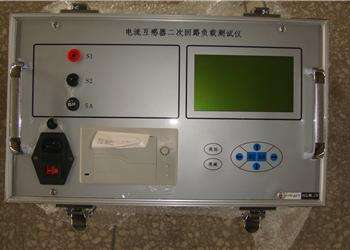
Ultrasonic partial discharge detector is an important tool used to detect partial discharge phenomena in power equipment. This instrument plays a crucial role in the maintenance and fault diagnosis of power systems. This article will detail the working principle, construction, application fields, and precautions for use of the ultrasonic partial discharge detector.
Working Principle
When partial discharge occurs in the insulating medium of high-voltage power equipment due to various reasons, a series of physical phenomena are generated, including ultrasonic waves. The ultrasonic partial discharge detector utilizes this characteristic to detect these ultrasonic signals, thereby determining the occurrence of partial discharge.
Ultrasonic waves generated by partial discharge: Partial discharge generates ultrasonic signals inside the equipment, which can penetrate the equipment's casing and propagate to the outside.
Ultrasonic sensor: Ultrasonic sensors installed on the outside of the equipment capture these ultrasonic signals.
Signal processing: The captured signals are sent into the instrument for processing, including amplification, filtering, and other steps.
Data analysis: The processed signals are displayed on the screen in the form of waveforms or numerical values for the operator to analyze.
Construction
The main components of the ultrasonic partial discharge detector include:
Ultrasonic sensor: Usually made of piezoelectric ceramics, used to receive ultrasonic signals.
Preamplifier: Improves the signal-to-noise ratio.
Signal processor: Processes the signal through filtering, amplification, etc.
Display: Shows the waveform or numerical value of discharge pulses.
Data storage and analysis software: Used to record and analyze detection data.
Usage Method
Startup preparation: Check the device's battery level and ensure the sensor is correctly connected.
Calibration: Calibrate according to the manufacturer's guidelines to ensure accurate measurement.
Connect sensor: Place the ultrasonic sensor at an appropriate position on the equipment under test.
Data acquisition: Start the instrument to begin collecting data.
Data analysis: Observe characteristics such as signal strength and waveform on the display.
Result recording: Record abnormal readings and their locations.
Follow-up measures: If abnormalities are detected, further diagnostic or maintenance measures are required.
Application Fields
Ultrasonic partial discharge detectors are widely used in multiple fields:
Power systems: Used for condition monitoring of power equipment such as transformers, cables, and switchgear.
Manufacturing: Used for quality control of electrical equipment such as motors and generators.
Research institutions: Used for research and development of new materials and technologies.
Aerospace: Used for condition monitoring of aircraft electrical systems.
Precautions
Safe operation: Before conducting detection, ensure compliance with all safety regulations.
Environmental factors: Try to conduct detection in a quiet environment to reduce the impact of background noise.
Equipment inspection: Before use, check whether the battery level, date, time, and functions are normal.
Signal check: Ensure that a slight, uniform electrical noise is heard in the earphones, and that the curve drawing area on the test interface shows the center line aligned with 0dB, with the average value 10dB lower.
Save results: After confirmation, click the save button on the device screen to store the test results for later management and analysis.
Conclusion
The ultrasonic partial discharge detector is an important tool in power system maintenance. It helps technical personnel quickly discover fault risks inside electrical equipment, solve problems early, and ensure the healthy operation of electrical equipment. With technological development, such instruments will become more intelligent and portable, further improving the safety and reliability of power systems.