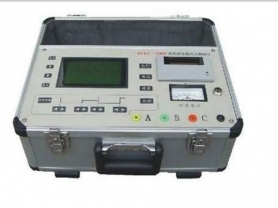
Transformer test transformer, also known as test transformer or high-voltage test transformer
is a device specifically used for insulation performance testing of various electrical equipment (especially transformers). It can provide high voltage to simulate electrical stress under actual working conditions, thereby verifying the stability and safety of the tested equipment under these conditions. Such equipment is widely used in the power system, manufacturing, and scientific research fields.
Main Uses
Insulation testing: Evaluate whether the insulation materials of transformers and other high-voltage electrical equipment can operate safely at rated voltage.
Withstand voltage test: Verify whether the equipment can withstand short-term overvoltage impacts without breakdown.
Partial discharge testing: Detect whether there are tiny arcs or discharge phenomena inside the equipment that may cause faults.
Working Principle
The transformer test transformer converts standard mains electricity (such as 220V/380V) into the required high voltage (usually up to tens of thousands of volts) through a step-up transformer. This process involves the principle of electromagnetic induction, where the current flowing in the primary coil generates a magnetic field, inducing a high voltage in the secondary coil. To ensure operational safety and accuracy, modern test transformers are typically equipped with precise control systems and multiple protection mechanisms.
Features and Advantages
High efficiency: Can reach the set high voltage value in a short time, meeting the needs of rapid testing.
Strong safety: Equipped with comprehensive protection functions, including overcurrent protection, overvoltage protection, grounding protection, etc., ensuring personal and equipment safety during use.
High precision: The output voltage can be precisely adjusted with a small fluctuation range, ensuring the reliability of test results.
Easy operation: Most models adopt digital control panels, simplifying the setup process and supporting automatic test programs.
Selection Guide
When selecting a suitable transformer test transformer, the following factors should be considered:
Voltage level: Determine the required maximum output voltage based on the requirements of the equipment under test.
Power capacity: Ensure that the selected equipment can provide sufficient power to complete all scheduled test items.
Portability: If testing needs to be performed on site, choose products that are lightweight and compact.
Additional features: For example, whether data logging, remote monitoring, and other functions meet your specific needs.
With the development of technology, the design of transformer test transformers is continuously improving, aiming to enhance their efficiency, safety, and ease of use to meet the needs of different user groups. I hope this brief article helps you better understand transformer test transformers and their applications. If you have more specific questions or need further information, please feel free to let us know!
Please note that since the current time is February 12, 2025, the above information may be based on technological developments up to that point. For the latest technology and product details, it is recommended to consult manufacturers directly or refer to the latest industry reports.