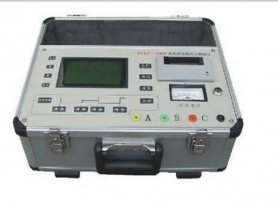
High Current Generator is a device specifically designed to produce high currents, widely used in power system testing, electrical equipment performance evaluation, material testing, and other fields. Its main function is to conduct temperature rise tests, short-circuit tests, and dynamic and thermal stability tests on various electrical products and equipment, ensuring their safety and reliability under actual working conditions.
I. Working Principle
The basic principle of the High Current Generator is based on the law of electromagnetic induction, controlling the output current by adjusting the input voltage and frequency. Specifically, it typically includes the following key components:
Power Module: Provides the necessary electrical energy input.
Transformer: Used to step up or step down the input voltage to achieve the desired current level.
Rectifier (if DC output is needed): Converts AC to DC, suitable for specific application scenarios.
Control System: Modern high current generators are equipped with advanced control systems that can precisely adjust and stabilize the output current, and provide multiple protection mechanisms to prevent overload and damage.
II. Application Fields
Power System Maintenance and Repair: Conduct temperature rise tests on circuit breakers, switchgear, and other equipment to verify their durability during long-term operation.
Industrial Manufacturing: Used in motor starting tests, welding equipment commissioning, and other occasions to verify whether product performance indicators meet requirements.
Scientific Research Experiments: Support the research and development of new materials, such as testing the resistance characteristics of new conductive materials and their performance under high-temperature conditions.
Quality Inspection: As part of quality assurance, conduct routine inspections on electrical products coming off the production line to ensure product quality meets standards.
III. Technical Features
High Efficiency: Capable of providing stable and continuous high current output to meet the needs of different scenarios.
Safety: Equipped with comprehensive protection measures, such as overheat protection and overcurrent protection, ensuring the safety of operators.
Intelligence: Integrated with intelligent control software, supporting remote monitoring and data recording analysis, facilitating user management and maintenance.
IV. Development Trends
With the advancement of technology, high current generators are developing towards more efficient, environmentally friendly, and intelligent directions:
Miniaturization and Portability: Future devices will reduce size and weight while maintaining high performance, facilitating on-site operations.
Energy Efficiency: Improve energy utilization efficiency and reduce energy loss.
Automation and Informatization: Add functions such as automatic fault diagnosis and cloud data storage to achieve more convenient data management and services.
Conclusion
As an important electrical testing tool, the high current generator plays a key role in ensuring the stable operation of power systems and promoting the advancement of the electrical equipment manufacturing industry. Whether you are a professional engaged in power engineering or a technician involved in scientific research, it is essential to understand the working principle and application scope of high current generators. Furthermore, with the continuous advancement of related technologies, the application prospects of such equipment will become even broader.
If you have more specific questions about high current generators, such as how to choose a model that suits your needs, the latest technological developments, or precautions for use, please feel free to ask your questions!