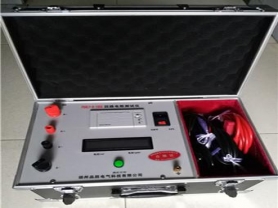
As the power system becomes increasingly complex, ensuring the safe and stable operation of power equipment is particularly important. As an advanced detection tool, the ultrasonic partial discharge inspection instrument can monitor the health status of power equipment without power outage, detect potential faults in a timely manner, and avoid major accidents. This article will introduce the working principle, usage methods, and precautions of the ultrasonic partial discharge inspection instrument.
Working Principle
The ultrasonic partial discharge inspection instrument is based on the ultrasonic detection method and can detect partial discharge phenomena occurring inside power equipment. When partial discharge occurs in the insulating materials of power equipment due to various reasons (such as manufacturing defects, aging, pollution, etc.), it is accompanied by the generation of ultrasonic signals (frequency usually greater than 20kHz). These ultrasonic signals propagate through media and gaps to the equipment shell and further diffuse into the air. The ultrasonic partial discharge inspection instrument captures these signals through ultrasonic sensors placed at the gaps of the equipment shell, and then analyzes the signal intensity and frequency characteristics through the built-in signal processing system, thereby judging the partial discharge condition of the power equipment.
Usage Methods
Preparation: Ensure the inspection instrument is fully charged, check that the sensor is intact, and perform necessary calibration.
Select Mode: Choose the appropriate detection mode according to the detection object. For example, for switchgear, flexible sensors may be used, while for transformers, contact ultrasonic sensors may be used.
Place Sensor: Place the ultrasonic sensor at the gaps or joint surfaces of the equipment shell.
Collect Data: Start the inspection instrument to collect data. The instrument usually displays real-time ultrasonic signal intensity and can be monitored through headphones.
Data Analysis: Observe the trend of signal intensity changes. If abnormal signals are found, laser positioning, image acquisition, and waveform recording can be performed.
Record Results: Save the detection results, including images, waveform diagrams, and specific location information.
Report Compilation: Compile a detection report based on the collected data to evaluate the health status of the equipment.
Precautions
Safety First: Always follow safety operating procedures during the detection process to ensure personnel safety.
Environmental Consideration: Try to conduct detection in a quiet environment to reduce background noise interference.
Equipment Check: Before use, check whether the instrument's functions are normal, such as battery level, headphone working status, etc.
Signal Recognition: Learn to distinguish between normal mechanical noise and abnormal partial discharge signals.
Data Preservation: Ensure all detection results are correctly recorded and saved for subsequent analysis.
Professional Training: Users should receive appropriate training to understand how to correctly operate the inspection instrument.
Conclusion
As an important tool in modern power system maintenance, the ultrasonic partial discharge inspection instrument not only improves inspection efficiency but also enhances the safety and reliability of power equipment. By regularly using this inspection instrument for detection, problems in equipment can be discovered early, corresponding preventive measures can be taken, and potential accident risks can be effectively avoided.