Of course. Here is a sample article about the "Micro-ohm Level Loop Resistance Tester", including introduction, product features, application scenarios, and conclusion.
Micro-ohm Level Loop Resistance Tester
Introduction
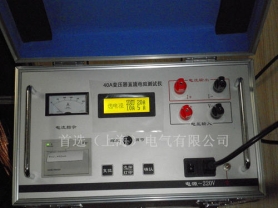
In the field of electrical engineering, especially in power system maintenance and testing, the micro-ohm level loop resistance tester is highly regarded for its excellent measurement accuracy and reliability. This tester can accurately measure resistance values down to the micro-ohm level, which is crucial for evaluating the quality of electrical connections and ensuring the safety and reliability of electrical systems. This article will provide a detailed introduction to the features, application scenarios, and importance of the micro-ohm level loop resistance tester in electrical engineering.
Product Features
The micro-ohm level loop resistance tester typically has the following features:
High-precision measurement: Capable of measuring resistance values down to the micro-ohm level, ensuring accurate and error-free measurement results.
Wide measurement range: Supports measurement from a few micro-ohms to several hundred milliohms or even higher, suitable for various application scenarios.
Stability and reliability: Uses high-quality components and advanced manufacturing processes to ensure long-term stable operation of the instrument.
Automation functions: Equipped with automatic range switching, automatic calibration, and other functions to simplify the operation process.
User-friendly interface: Features a large color touch screen with clear and intuitive display, making operation easy.
Data recording and analysis: Built-in memory can store a large amount of measurement data, which can be exported via USB, Bluetooth, or Wi-Fi for later analysis.
Durable design: Uses sturdy and durable casing materials, suitable for use in harsh environments.
Application Scenarios
The micro-ohm level loop resistance tester is widely used in the following fields:
Power systems: Used to check the contact resistance of key components such as high-voltage circuit breakers and transformer joints.
Rail transit: Detects the connection quality of track circuits to ensure the normal operation of signal systems.
Mine safety: Ensures good contact at cable connection points to avoid safety hazards caused by poor contact.
Building electrical: Tests connection points in building distribution systems to ensure electrical safety.
Manufacturing: Used for maintenance and troubleshooting of electrical equipment on production lines.
Usage Case
During a maintenance process at a large substation, the micro-ohm level loop resistance tester was used to conduct a comprehensive inspection of the contacts of all high-voltage circuit breakers. Through precise measurement, technicians discovered that some contacts had poor contact issues and promptly repaired them. This measure effectively avoided equipment overheating, failures, and even safety accidents caused by excessively high contact resistance.
Conclusion
The micro-ohm level loop resistance tester plays an extremely important role in electrical engineering due to its high-precision measurement capability and wide range of application scenarios. With continuous technological advancements, the performance and functions of such testers are constantly improving, providing electrical engineers with more convenient and efficient testing methods. In the future, the micro-ohm level loop resistance tester will play an important role in a broader range of fields and become an indispensable part of electrical maintenance work.
Please note that the above content is an overview example. In practical applications, detailed design and customization may be required based on specific technical specifications and actual conditions. If you need more in-depth technical details or have other specific requirements, please feel free to let me know.