Of course. Below is an article about the dielectric loss tester, aiming to introduce the basic concepts, features, and usage scenarios of this tester.
Dielectric Loss Tester: Key Tool for Evaluating Insulation Material Performance
Introduction
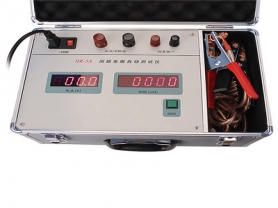
A dielectric loss tester is an important testing device used to evaluate the performance of insulation materials in electrical equipment. By measuring the dielectric loss factor (tanδ), it is possible to assess the loss of insulation materials at different frequencies, thereby determining their health condition. This article will provide a detailed introduction to the features of the dielectric loss tester and its applications in the power industry.
I. Overview
A dielectric loss tester is a specialized instrument designed to measure the dielectric loss factor (tanδ) of insulation materials in electrical equipment. It provides accurate measurement results, helping to evaluate the aging degree, contamination level, and the presence of defects in insulation materials.
II. Features
High-precision measurement: Utilizes advanced measurement techniques and algorithms to ensure the accuracy of test results.
Wide frequency band testing: Supports multiple test frequencies from low to high, covering different types of electrical equipment.
Intelligent operation: Features a user-friendly interface with touch screen operation, simplifying the testing process.
Multi-function integration: In addition to basic dielectric loss testing, it can also perform capacitance measurement, resistance measurement, and other modes.
Data management: Built-in memory to save a large amount of test data, with support for data export and remote monitoring.
High automation: Automatically completes the testing process, reducing human errors.
III. Application Scenarios
Power facility maintenance: Used for evaluating insulation materials in power transformers, cables, motors, and other equipment.
Manufacturing quality control: Performs quality inspection on production lines of electrical equipment.
Laboratory research: Used for performance analysis of insulation materials in scientific research.
Power system commissioning: Used for debugging the working status of electrical equipment in newly built or renovated power systems.
IV. Usage Precautions
Safety first: Before conducting dielectric loss tests, ensure that all equipment to be tested is powered off and fully discharged.
Environmental factors: Pay attention to ambient temperature and humidity, ensuring that test conditions meet standard requirements.
Operating procedures: Follow correct operating steps to avoid test errors caused by misoperation.
Regular calibration: Regularly calibrate the tester to ensure its measurement accuracy.
V. Case Analysis
Case background: A power company, during the maintenance of power transformers, found the need for a testing device that can accurately measure the performance of transformer insulation materials.
Solution:
Equipment selection: Chose a dielectric loss tester with high-precision measurement capabilities.
Test frequency: Used a test frequency range suitable for power transformers.
Data analysis: Easily reviewed and analyzed test results through the built-in data management system.
Remote monitoring: Utilized wireless communication functions to achieve remote monitoring and data transmission.
Result: By using the dielectric loss tester, testing efficiency and accuracy were significantly improved, ensuring that the insulation materials of the power transformer remained in good condition.
VI. Conclusion
The dielectric loss tester is an important tool in power maintenance and repair work, helping technicians quickly and accurately evaluate the performance of insulation materials in electrical equipment. By properly selecting and using this tester, the safety and reliability of power systems can be greatly enhanced.
I hope this article helps you understand the basic information about the dielectric loss tester and its applications in the power industry. If you need more detailed technical information or introductions to specific models, please let me know, and I will do my best to assist.