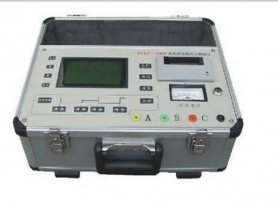
Power transformers are key equipment in the power system, and their performance directly affects the safe and stable operation of the power grid. In order to ensure the quality and reliability of transformers, a series of strict electrical tests must be carried out. As an important tool in testing, the transformer test transformer can provide a stable and controllable high-voltage power supply, which is an indispensable part of completing these tests.
Functions of the transformer test transformer
High voltage output: It can provide voltage output up to hundreds of kilovolts to meet the testing needs of different types of power transformers.
Precise adjustment: It has a fine voltage regulation function and can precisely adjust the output voltage according to the test requirements.
Multiple protections: It has built-in multiple protection mechanisms (such as overvoltage and overcurrent protection) to ensure the safety of personnel and equipment during the test.
Data acquisition: It is equipped with a data acquisition system that can record key parameters such as voltage and current during the test.
Remote control: It supports remote operation, which is convenient for testing in high-voltage environments.
Basic composition
The transformer test transformer usually includes the following main components:
High-voltage winding: Used to generate high-voltage output.
Low-voltage winding: Receives the input power supply, usually standard mains electricity.
Voltage regulation device: Adjusts the output voltage by changing the turns ratio between the high-voltage and low-voltage windings.
Control panel: Provides a user interface for setting parameters and monitoring the test status.
Protection circuit: Quickly cuts off the power supply in abnormal situations to protect the safety of the equipment.
Main test items
Power frequency withstand voltage test: Tests the insulation strength of the transformer under power frequency conditions.
Partial discharge test: Detects whether there is partial discharge in the transformer under high voltage.
No-load loss test: Measures the loss of the transformer under no-load conditions.
Load loss test: Evaluates the performance of the transformer under load conditions.
Ratio test: Verifies whether the actual ratio of the transformer is consistent with the nominal value.
Application scenarios
Manufacturing plants: Conduct quality inspection before delivery during the production process of power transformers.
Power companies: Perform regular maintenance inspections on transformers in service to ensure their normal operation.
Research institutions: Used for testing when researching new transformer materials and technologies.
Education and training: Used as a teaching tool in electrical engineering education to help students understand the working principle of transformers.
Usage precautions
Safety first: Operations should be carried out strictly in accordance with safety regulations to avoid safety accidents such as electric shock.
Parameter setting: Correctly set the test conditions according to the test type and transformer parameters.
Environmental factors: Pay attention to the temperature, humidity and other conditions of the test environment to ensure the accuracy of the test results.
Regular calibration: Regularly calibrate the test transformer to ensure its output accuracy.
Conclusion
The transformer test transformer is an indispensable tool in the detection of power transformers. By providing a stable high-voltage power supply and precise control functions, it ensures the accurate testing of various electrical properties of transformers. The reasonable use of the test transformer can effectively improve the reliability and safety of the power system.
Outlook
With the advancement of technology, the future transformer test transformer will be more intelligent, automated, and have stronger data processing capabilities. This will help further improve test efficiency and accuracy, and better serve the detection and maintenance of power equipment.
This article outline provides readers with basic knowledge and application guidance about the transformer test transformer. When writing a complete article, more technical details and actual case analysis can be added according to specific needs.