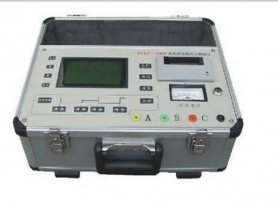
A high current generator is a specialized device used to produce large currents, widely applied in power system testing, maintenance, and scientific research experiments. It can simulate actual operating current conditions to test the performance and reliability of electrical equipment, especially playing a significant role in testing high-voltage electrical apparatus, circuit breakers, relays, and other devices. This article will detail the working principle, main functions, application scenarios, and importance of high current generators in power systems.
Working Principle
A high current generator typically consists of the following main components:
Power Module: Provides stable DC or AC power.
Current Boosting Module: Amplifies the input current to the required high current through a step-up transformer or current amplifier.
Control and Monitoring System: Used to control current output and monitor current changes.
Protection Devices: Provide safety measures such as overload protection and overheat protection.
The working principle of a high current generator is to amplify the small input current to the desired high current level through the current boosting module, and then apply this high current to the device under test. The control and monitoring system ensures the stability and accuracy of the current output, and triggers protection devices when necessary to ensure operational safety.
Main Functions
Current Output: Can provide current output ranging from tens of amperes to thousands of amperes or even higher.
Precision Control: Ensures the stability of output current through precise current control.
Protection Functions: Equipped with multiple protection functions such as overload protection and overheat protection to ensure equipment safety.
Data Recording: Some advanced models can record current output data for later analysis.
Easy Operation: Has a user-friendly interface for easy setting and control.
Application Scenarios
High current generators have a wide range of applications in power systems, including but not limited to:
Circuit Breaker Testing: Used to test the breaking capacity and reliability of circuit breakers.
Relay Protection Testing: Simulates high current faults to test the operating performance of relay protection devices.
Contactor Testing: Tests the performance of contactors under high current conditions.
Cable Testing: Used to test the current-carrying capacity of cables and the contact resistance of connection points.
Research and Teaching: Used in laboratories to study the behavior of electrical equipment under extreme conditions.
Usage Method
Preparation: Ensure the equipment is in good condition and connect the test leads.
Set Parameters: Set parameters such as current magnitude and duration according to test requirements.
Start Test: Start the equipment and conduct the test according to the set parameters.
Data Recording: Record current changes and other relevant data during the test.
Result Analysis: Analyze the performance of the tested equipment based on recorded data.
Practical Application Case
In a relay protection test at a power company, technicians used a high current generator to simulate a severe short-circuit fault. Through testing, it was found that the relay protection device failed to operate promptly under high current conditions, indicating a potential safety hazard. Further analysis revealed that the issue was due to unreasonable setting values of the protection device. After adjusting the setting values and retesting, it was ensured that the relay protection device could operate reliably during faults.
Technical Development and Trends
With the development of power systems and technological progress, high current generators are continuously being improved and innovated:
Intelligence: Modern high current generators are typically equipped with advanced computer control systems that can automatically complete test procedures and provide fault diagnosis suggestions through data analysis.
Portability: Some portable high current generators have been developed, allowing for rapid on-site testing and improving work efficiency.
Multi-function Integration: New types of high current generators integrate multiple testing functions, enabling one-stop completion of multiple test tasks, reducing equipment footprint and cost.
Remote Monitoring: Through network technology, high current generators can achieve remote monitoring and data transmission, facilitating centralized management of testing work at multiple locations.
Conclusion
High current generators are indispensable tools in power system testing and maintenance. By simulating actual high current operating conditions, they can effectively evaluate the performance and reliability of electrical equipment. With technological advancements, future equipment will become more intelligent and convenient, providing more support for power system maintenance. Through regular testing and maintenance, not only can the reliability of the power system be improved, but also the losses caused by power outages due to electrical equipment failures can be significantly reduced.